042 Quiet Rebellion
While the world geared up for Black Friday shopping sprees last month, Tel Aviv staged something different. For the fifth consecutive year, the municipality declared November as "Lo Tzricha" month - a play on words, in Hebrew, meaning both "Don't Need" and “No consumerism”. It’s a city-wide initiative encouraging residents to resist consumer culture precisely when global spending reaches its annual peak. The timing wasn't accidental, but a deliberate counter-programming to the Black Friday frenzy that has increasingly dominated Israeli consumer behavior along with the rest of the world.
The campaign's premise is refreshingly simple: the most effective way to deal with waste and overconsumption is to prevent them from happening in the first place. Instead of buying new items, Tel Avivians were invited to participate in dozens of activities across the city - clothing swap fairs, repair workshops, community lending libraries and environmental education sessions. The goal was to combat both the rising cost of living and the climate crisis through smarter, more communal consumption patterns.
Throughout November, seventeen donation and exchange cabinets operated across Tel Aviv neighborhoods, where residents could take or leave items without spending one shekel. These weren't hidden away in back alleys - they stood as visible neighborhood anchors where people could refresh their wardrobes, find household items, or pick up children's equipment by participating in the sharing economy. The municipality also ran "Auto-beged" (meaning “clothing car”) - a vintage van that traveled between neighborhoods, collecting and selling second-hand designer clothes and vintage pieces.
The repair culture received particular emphasis. Volunteer "repair bars" brought together residents with golden hands - people of all ages and genders skilled in everything from sewing and embroidery to electronics and vacuum cleaner repairs. These gatherings operated on a simple principle: bring one item per session and get it fixed for free. The initiative extended to furniture refurbishment workshops and hands-on training in everyday crafts and repair skills designed to reduce consumption and make better use of what already exists.
Bicycle repair workshop in Tel Aviv
For those needing items only occasionally, community equipment lending stations offered an alternative to purchasing. Why buy camping gear you'll use only twice a year when you can borrow it from a neighborhood lending library? These stations, operating at community centres across Tel Aviv, became more than just storage spaces - they evolved into community hubs enabling workshops and meetups.
Deputy Mayor Tzipi Brand explained the philosophy behind the initiative: "We believe that through community-based, collaborative, and smart methods, we can ease expenses, strengthen the sense of belonging, and protect the environment. 'Lo Tzricha' month is an opportunity to think differently about consumption, to choose a path that benefits us all."
The "Lo Tzricha" initiative offers a different value system - one that measures wealth not by what you can buy, but by what you can share, repair and reuse. The initiative continued year-round activities that operate throughout the calendar, but the concentrated focus last month, coming precisely when consumer culture reaches its fever pitch, made a strong statement: the best way forward isn't buying cheap, but rather not buying at all. In a country grappling with high living costs, within a region facing environmental challenges, at a time when loneliness needs to be actively dealt with, Tel Aviv's fifth annual "Lo Tzricha" month is a path to affordability, sustainability and sense of community.
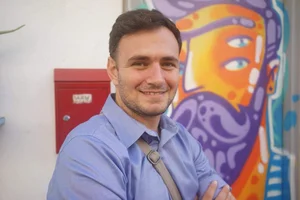
My name is Tomer Chelouche and I've been guiding tours in Tel Aviv since 2008. I started out of fascination with my family history - the Chelouche family was one of the founding families of Tel Aviv. My ancestors built this city - and I'm telling its story.
The best way to get to know Tel Aviv better is by purchasing one of my audio tours. Here's one way to experience it -
The Gutman Hotel stands as a luxury boutique property right beside Neve Tzedek. Housed in three meticulously restored 19th-century Templar buildings that preserve their distinctive architectural charm, the hotel is located just steps from the Nahum Gutman Museum within Tel Aviv's most picturesque neighborhood. Hotel guests enjoy complimentary access to the neighboring museum, including special events and exhibitions, creating a perfect cultural experience.
On the hotel's ground floor, you'll find La Bohème - an intimate chef restaurant and wine bar where the menu is grounded in seasonal, local ingredients. The culinary approach draws from diverse traditions, offering everything from rich breakfasts to small tapas plates, fresh fish, delicate pastas, and boutique wines. The atmosphere combines rustic urban design with classic comfort, right adjacent to the Railway Park.
After enjoying the hotel's excellent breakfast, you'll be perfectly placed to start my Neve Tzedek audio tour. The walk begins just steps from the hotel, at the Suzanne Dellal Performing Arts Centre in a courtyard flanked by historical buildings. Give yourself at least 40 minutes to fully explore what early residents called "le petit Paris" - Little Paris - on account of its beauty.
This self-guided tour takes you through the first Jewish neighborhood built outside the walls of ancient Jaffa - founded in 1887 by my great-great-great grandfather, Aron Chelouche, who wanted to develop a modern Jewish settlement. My narration will guide you past the girls' school, now graced by dancers from Tel Aviv's world-renowned Bat Sheva dance group, between citrus trees adorning the place.
You'll visit my forefathers' house on the way to Chelouche Bridge, built especially so my great-great-great grandfather could travel into town. I'll take you to the Gutman Museum, where I'll tell you about famous writers and revolutionaries who all called the neighborhood home in the early 1900s and revived Hebrew culture.
Nahum Gutman Museum of Art in Neve Tzedek
Along the way, you'll discover Neve Tzedek's secrets - how to use shutter holders to signal your love interest, the house listed for 100 million dollars, how to watch movies at the Eden Cinema without paying the ticket, and the balcony that helped win a Nobel Prize for literature. You'll hear about the scandalous mayoral elections of 1936 and the rivalry between the Rokach and Chelouche families that shaped Tel Aviv's early history.
The route brings you through narrow and picturesque streets that now offer a welcome respite from Tel Aviv's non-stop energy, revealing how this neighborhood evolved from its petit Paris beginnings into the artistic haven it is today. From the endpoint, you can easily return to the Gutman Hotel for a mid-day rest or lunch at La Bohème.
You can make sure you've downloaded my Neve Tzedek audio tour before you head out, or you can download it on the go if you're set with a data package allowing for uninterrupted internet access. There's a link in the show notes to purchase my audio tour -
Picturesque Neve Tzedek: A Tour around Israel’s Petit Paris
If you have any questions - you’ll find all the ways to contact me on telaviv.tours (telaviv as one word, no space, no hyphen) and there’s a link in the show notes for your digital convenience.
Travellers to Israel this January 2026 will find that some of the country's most compelling sites lie within an hour's drive from Tel Aviv. After last episode's list of places in Northern Israel, now I’d like to share some options for sites not far from the city. Average temperatures hover between 10-18 degrees celsius (that's about 50 to 65 Fahrenheit) - perfect weather for exploring archaeological ruins, forest trails and historic towns without the oppressive summer heat. While many visitors focus exclusively on Tel Aviv and Jerusalem, for those with ample time on their visit to Israel, I recommend exploring some of the gems in the region surrounding Tel Aviv.
Caesarea stands as one of Israel's most impressive archaeological sites, sprawling along the Mediterranean coast about 45 minutes north of Tel Aviv. King Herod the Great built this port city in the first century BC, naming it after the Roman Caesar Augustus. January's mild temperatures make exploring the extensive ruins comfortable, including a Crusader fortress and a Roman hippodrome where chariot races thundered. The ancient aqueduct stretching along the beach creates one of Israel's most photographed scenes, particularly striking when winter storms darken the sea waves behind the stone arches.
Ben Shemen Forest, located about 30 minutes east of Tel Aviv near the city of Modi’in, offers an entirely different experience. This extensive woodland area was planted by early Zionist pioneers in the early 20th century, transforming what was once rocky terrain into one of Israel's largest forests. It’s interesting to note that thanks to these forestation efforts, Israel is now the only place in the world with more forest areas today compared to 100 years ago. January brings the forest to life - rain-soaked earth releases the scent of pine trees, wildflowers begin emerging, and the trails become pleasantly muddy rather than dusty. The forest includes picnic areas, cycling paths, and several marked hiking routes of varying difficulty. Playgrounds and barbecue facilities are frequented by Israeli families mostly over the weekend.
Latrun, just beyond Ben Shemen Forest, is a strategic hilltop that witnessed fierce battles during Israel's 1948 War of Independence. This is one of the reasons that the place was chosen as the site of the Armored Corps Museum (“Yad La-Shiryon”). The museum houses one of the world's largest tank collections, displaying hundreds of armored vehicles from multiple nations and eras. Even visitors without particular interest in military history find the site compelling - the museum tells the story of Israel's defensive struggles through personal testimonies and historical context. The adjacent monastery, established in 1890, maintains its tradition of producing wine, olive oil and honey. The monks observe a vow of silence, creating an atmosphere of tranquility that contrasts sharply with the nearby military museum. At Latrun you’ll also find Mini Israel - the local version of Madurodam miniature park.
The Stalactites Cave, discovered accidentally in 1968 during quarry work, contains one of the world's most concentrated collections of stalactites and stalagmites. Located in the Judean Hills about 45 minutes drive from Tel Aviv, this natural wonder was formed over millions of years as water slowly deposited calcium carbonate into extraordinary shapes. The cave maintains a constant temperature year-round, making it equally pleasant in January as any other month. The path leading from the parking lot to the cave offers a nice hike with beautiful views. Tours inside the cave last about 40 minutes, taking visitors through the illuminated chambers where formations resemble everything from waterfalls to organ pipes.

Formed over millions of years. The Stalactites Cave
Ramle, one of Israel's most overlooked historic towns, sits just 25 minutes from Tel Aviv. Founded in the 8th century, it is considered the only town established in the region under the rule of the Islamic Caliphate. The White Tower, a 27-meter minaret from the 13th century, is the city’s most important historic landmark. Below ground, the Pool of Arches creates an atmospheric underground lake that visitors can explore by rowboat. Ramle's markets retain an authentic Middle Eastern character largely untouched by tourism, and the town's mix of Jewish and Arab residents creates a cultural complexity worth experiencing.
Tel Ashkelon, located along the southern coastal plain, about 45 minutes from Tel Aviv, preserves the ruins of an important port city in the ancient world. The Philistines, famous from biblical accounts of their conflicts with the Israelites, made Ashkelon one of their five major cities. The national park encompasses extensive ruins from multiple periods - including the oldest arched gate in the world dating 4000 years ago, Roman basilicas, Byzantine churches, and Crusader fortifications. In January, the stormy Mediterranean backdrop adds drama to the ancient stones.
The Valley of Elah, located in the Judean lowlands about an hour from Tel Aviv, has emerged as Israel's premier wine region. Biblical tradition identifies this valley as where young David defeated Goliath, but today it's known for boutique wineries producing world-class wines. The valley's unique microclimate - cool nights and warm days - creates ideal conditions for growing premium grapes. January falls during the quiet season between harvest and budding, but wineries maintain regular hours for tastings and tours. The valley includes several cheese farms and olive oil producers, allowing visitors to create a full day of tastings. Seeing the surrounding landscape, you’ll immediately understand why the area was dubbed as Israel’s Tuscany.
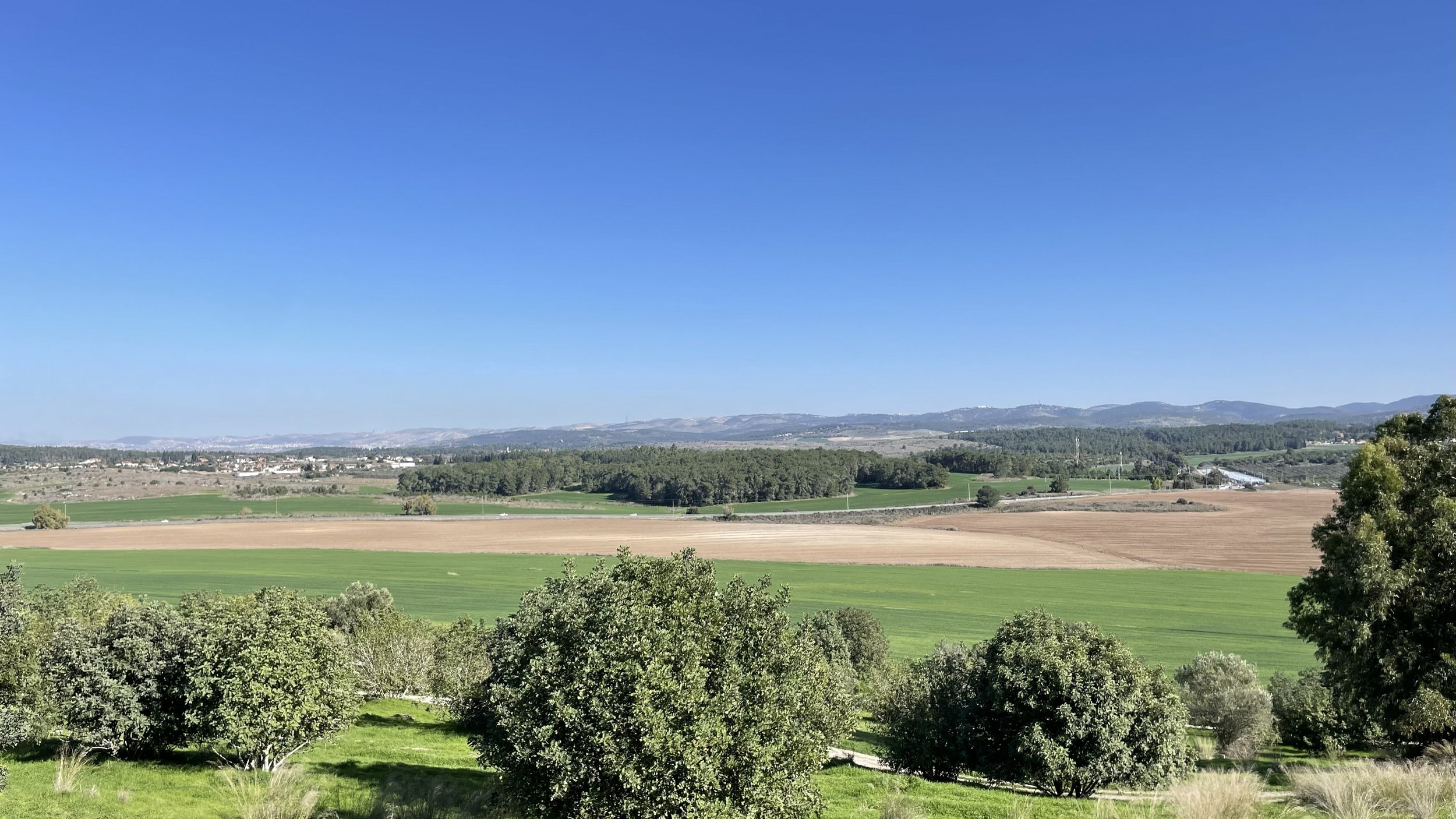
Lush and green at winter time. The Lowlands of Israel
These destinations share several advantages for visitors based in Tel Aviv. None requires overnight accommodation - you can easily visit one or two sites in a day trip and return to Tel Aviv for dinner. What strikes most visitors is how these nearby regions remain relatively undiscovered by international tourism despite their proximity to Tel Aviv. This creates opportunities for more authentic experiences - you'll interact with local families at Ben Shemen Forest picnic areas, taste wines alongside Israeli enthusiasts at the Valley of Elah, and explore Ramle's markets without navigating tourist crowds.
For those coming to visit for an extended period, I recommend being based in Tel Aviv, enjoying its restaurants, pubs and nightlife, while day-tripping to archaeological wonders, natural sites and wine country that reveal Israel's incredible diversity within a tiny geographic area. You'll leave with a richer understanding of Israel's landscape, history and culture.
Thanks for listening and you’ll hear from me again when the next episode comes out next week.Until then - I am Tel Aviv tour guide Tomer Chelouche, signing off and hoping to see you soon in Tel Aviv.