043 A Little Goat
The "Tel Aviv Festival" took place last month under the artistic direction of Shlomi Shaban. In accordance with his grandiose musical vision, the festival opened with a highlight - a tribute to Israeli singer-songwriter Hava Alberstein, marking the 50th anniversary of the album "Like a Wild Plant." This was her 15th record. Throughout her musical career, she has released more than 60 albums (and there is no reason to think that she has any intention of stopping - at the age of 78, she is still working). That album wasn’t just another one in a long line of records by Alberstein. In fact, when it was released in 1975, it was considered a new beginning for Israeli music after the great national trauma of the Yom Kippur War.
The tribute performance featured only women - Rona Keinan and Miri Mesika, Neta Barzilai and Efrat Gosh, Esther Rada and Ninet Tayeb - all of whom drew inspiration from Alberstein's incredible work over the years. But it seems that of all the songs performed on stage, there was one that stole the show. It was actually a song that Alberstein not only performed, but also wrote herself. Or rather - added her own words to it.
Only in later albums did she muster the courage to write her own lyrics. This was the case with the album "London", released in 1989. Among the songs on the album appeared "Chad Gadya" - a song in which Alberstein translated into Hebrew the famous story from the Passover Haggadah. But she made two significant changes to it.
One change was that she stopped the story before the end. After the goat, the cat, the dog, the stick, the fire, the water, the ox, the slaughterer and the angel of death - at the end of the Passover Haggadah, God appears. That's the whole idea. But in Alberstein's lyrics - God is absent.
The second thing she did is even more impressive. Not only did she remove God from the poem, but she also inserted herself:
< Chad Gadya performed by Chava Alberstein on Israeli TV in the early 1990’s >
When the song first came out on the radio, it was during the height of the first intifada - a violent uprising of Palestinians against Israeli forces. No one could escape Alberstein's powerful lyrics. In the song, she confesses that she is no longer the same person as she used to be. Following yet another wave of violence between Israelis and Palestinians, she has changed and now feels obligated to ask difficult questions, such as "How long will the cycle of horror continue?" Many have identified with the feeling of a national identity crisis. Are we still innocent peace-seekers? Or have we become a tiger and a predatory wolf? And when, if ever, will this madness end?
When asked about writing the song, Alberstein said: "It was a truly powerful need, and by some strange miracle I connected to something ancient with deep roots." Obviously, the reference is to the ancient text from the Passover Haggadah, but the melody also has deep roots. Alberstein actually wrote to the tune of an Italian version of "Chad Gadya", which was created by singer Angelo Branduardi in the 1970s:
< Angelo Branduardi perfomring Alla Fiera dell'Est on Italian TV in the 1970’s >
Branduardi created the song to a folk song - an ancient tune called La Mantovana. Israelis will immediately identify the melody, even though it was composed in northern Italy in the 16th century -
< La Mantovana - a famous Italian Renaissance melody, dated to the 16th century >
When this song was released - while IDF soldiers were fighting to suppress the Palestinian uprising - it was considered anti-patriotic. It didn't help that the lyrics were largely taken from Jewish tradition and that the melody was drawn from the same sources as the national anthem "Hatikva". The Israel Broadcasting Authority decided that the song "induces depression and serves the enemies of Israel", and banned “Chad Gadya” from broadcasting. A lively public debate broke out. Some went out to demonstrate against the decision, and even waved signs: "In a place where songs are cancelled, one day people will be cancelled". Only with the intervention of the Attorney General did the Israel Broadcasting Authority return "Chad Gadya" to the playlists. Perhaps also due to the media uproar surrounding the song, the album "London" sold tens of thousands of copies and was considered a huge success for Alberstein.
But Alberstein also paid a personal price. This is what she wrote in her memoir:
"The song "Chad Gadya" caused riots (thank God that the so violent social networks hadn’t existed yet). There was a very tense atmosphere and a police car was parked near my house due to the threats I had received... At that very time, I was invited to participate in the torch-lighting ceremony on Independence Day... A debate sparked in the choir that was supposed to sing at the ceremony, whether to get off the stage when I went up. I had a bodyguard who wouldn't move away from me... At the reception held after the ceremony at the Knesset building, Parliament Speaker Dov Shilensky refused to shake my hand."
The affair weighed on Alberstein to such an extent that she practically stopped performing in Israel in the early 1990s. For almost twenty years, she performed mainly in the United States, and only in recent years has she returned to perform in Israel.
At the tribute show to Alberstein, last month at the “Tel Aviv Festival”, the performance was by the "Bat Kol" choir, conducted by Anat Morag. About thirty young women took to the stage in Tel Aviv’s most respected music venue, and gave an extraordinary performance:
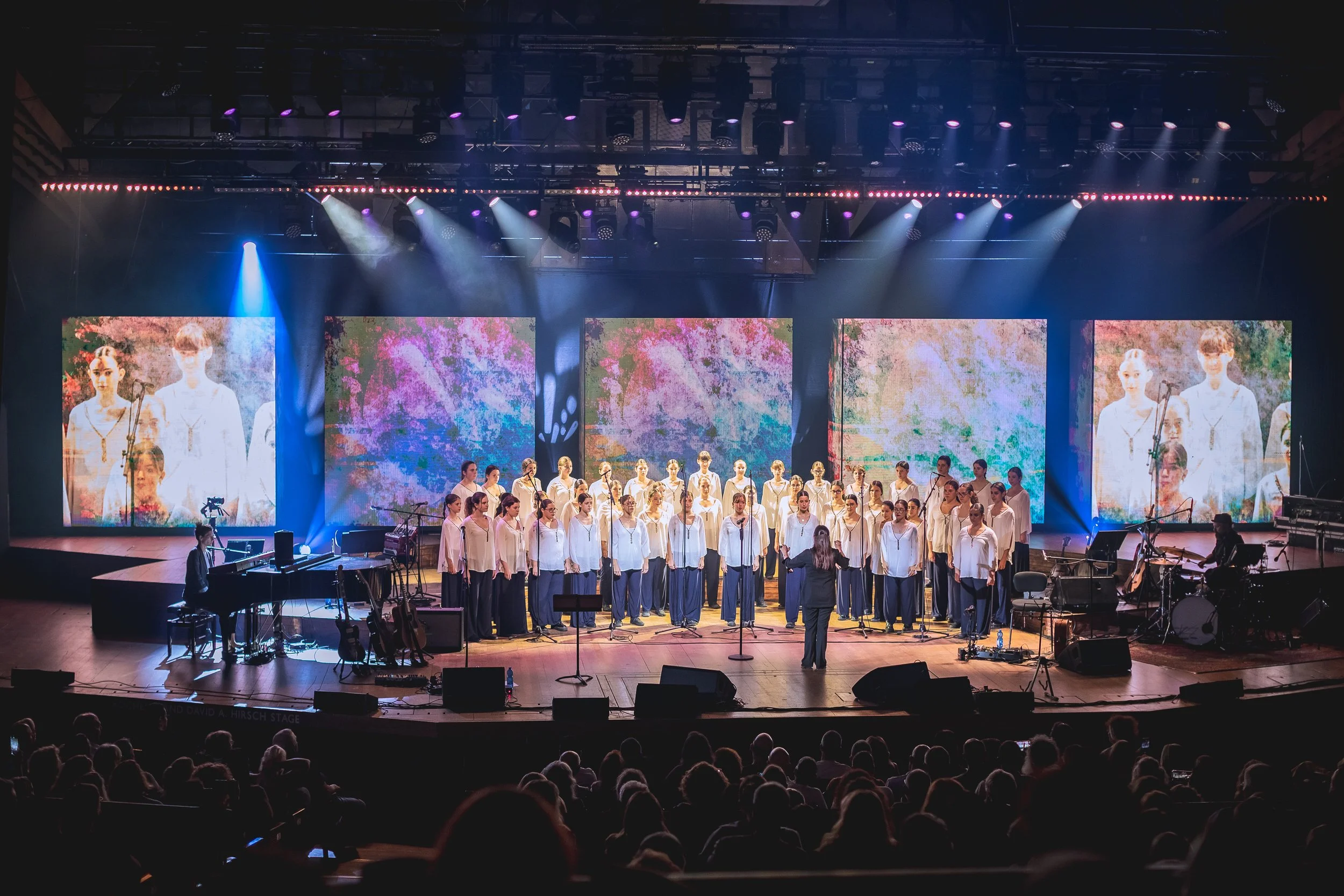
< Bat-Kol Girls' Choir performing “Chad Gadya” at the Tel Aviv Festival, November 2025 >
< Photo by Ariel Efron, courtesy of Tel Aviv-Yafo Municipality >
It was as if a lightning strike had electrified the hall. At the end of the performance, the choir received tremendous applause, and people in the audience began to rise to their feet. Alberstein later observed: "I feel that now there is a next-generation."
I was thinking about Alberstein's trajectory - from banned artist to national treasure, from exile to honor. The song that once seemed too painful for broadcast now receives standing ovations - in the heart of Tel Aviv, unsurprisingly.
My name is Tomer Chelouche and I've been guiding tours in Tel Aviv since 2008. I started out of fascination with my family history - the Chelouche family was one of the founding families of Tel Aviv. My ancestors built this city - and I'm telling its story.
The best way to get to know Tel Aviv better is by purchasing one of my audio tours. Here's one way to experience it -
The Savanna Hotel occupies a 1990s office building that was transformed into a boutique hotel in the heart of Tel Aviv, located on Bograshov Street behind Dizengoff Center. The building's conversion revealed beautiful concrete ceilings beneath the removed acoustic tiles, giving the hotel its industrial edge. It’s a self check-in accommodation, great for budget conscious solo travellers.
After settling into your room at Savanna, you'll be perfectly positioned to start my White City audio tour. The walk begins just two minutes away at Dizengoff Square, considered the heart of the White City. This self-guided tour explores why UNESCO designated Tel Aviv's White City as a world heritage site in 2003, taking you through the history and cultural significance of what has become a hallmark for architectural preservation.
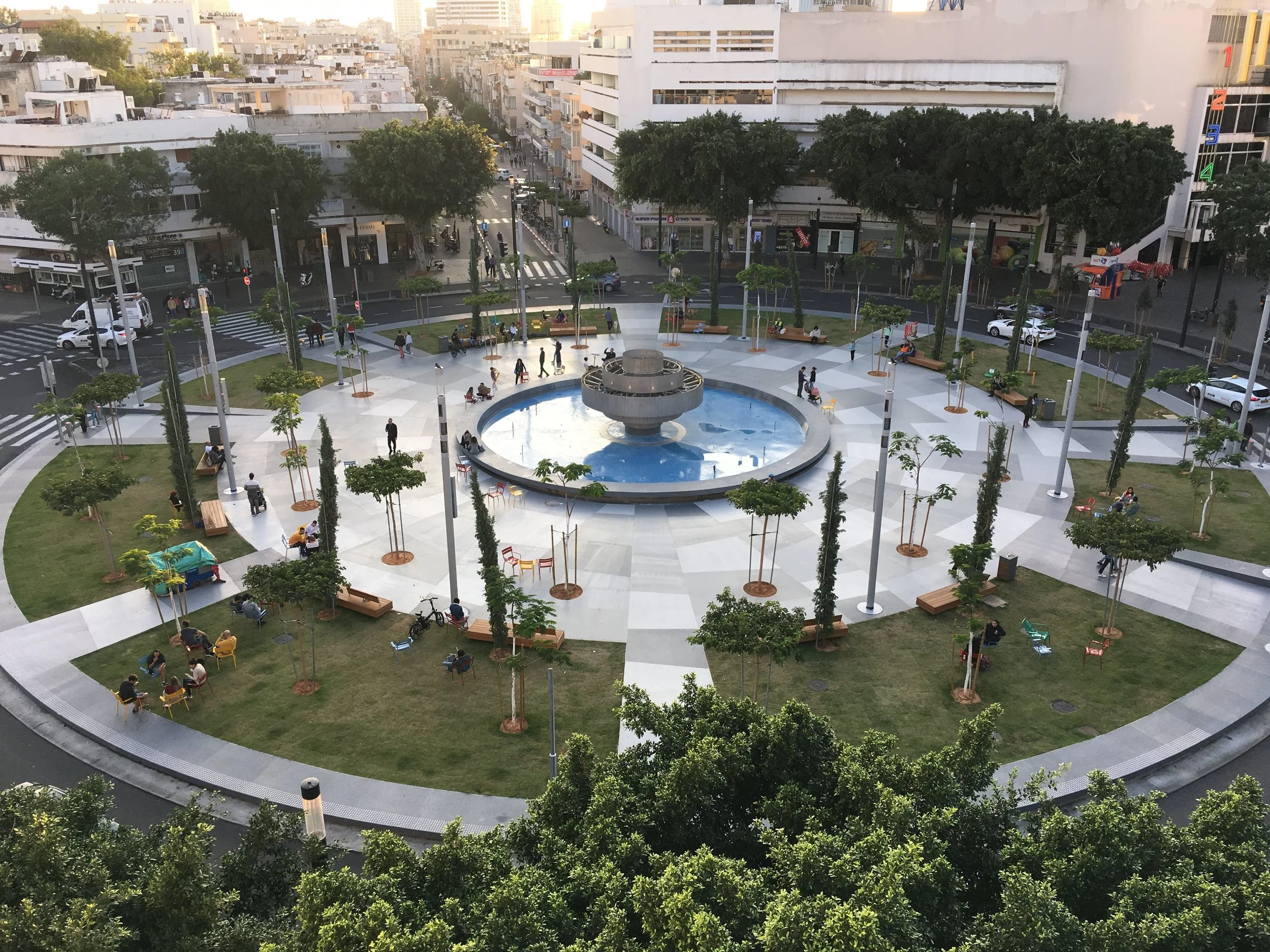
The centerpiece of the White City. Dizengoff Square
My narration will guide you from Dizengoff Square - surrounded by elegant International Style buildings designed by architect Genia Averbuch - through the interesting sites showcasing this heritage before concluding with a stroll on busy Dizengoff Street. You'll hear about the thousands of Bauhaus buildings constructed in the 1930s, celebrating elegance, simplicity and functionality.
The tour takes you through the architectural treasures that make Tel Aviv's White City world-renowned, revealing what lies at the heart of this extraordinary urban landscape. From the endpoint, you can easily walk back to Savanna Hotel through the vibrant streets of central Tel Aviv.
You can make sure you've downloaded my White City audio tour before you head out, or you can download it on the go if you're set with a data package allowing for uninterrupted internet access. There's a link in the show notes to purchase my audio tour -
If you have any questions - you’ll find all the ways to contact me on telaviv.tours (telaviv as one word, no space, no hyphen) and there’s a link in the show notes for your digital convenience.
Travellers to Israel this January 2026 will find that some of the country's most dramatic landscapes lie in southern Israel. This is part one of a two part series on the regions to visit in Israel’s South.
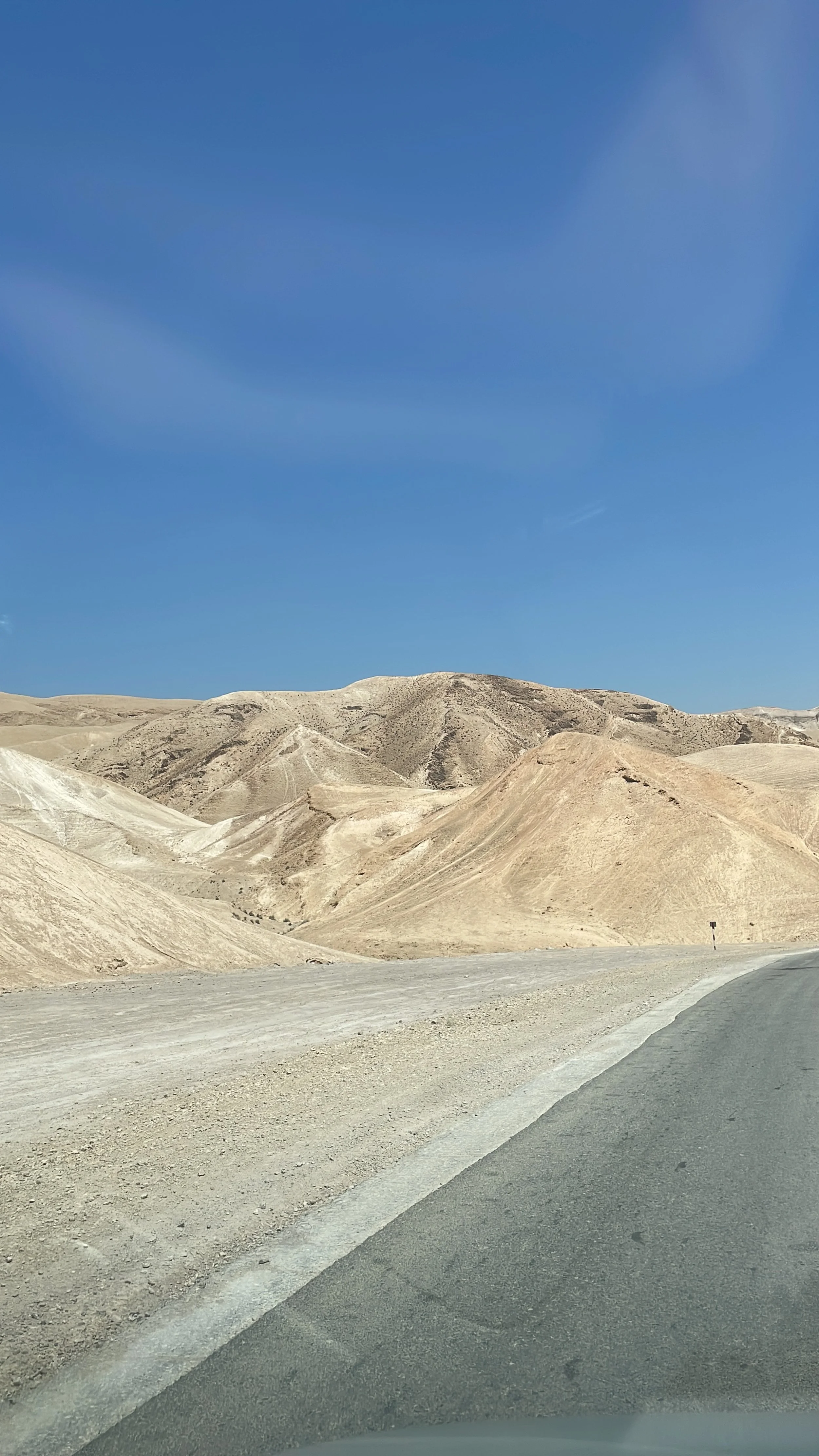
The Judean Desert en route to the Dead Sea
The Dead Sea, the lowest point on Earth, at 430 meters below sea level, ranks among the world's most unique natural phenomena. Located about 90 minutes from Tel Aviv, this salt-saturated lake allows no life to survive in its waters - hence the name - but allows visitors to float effortlessly on its surface. The mineral-rich mud along the shores has attracted health seekers for millennia. January's mild temperatures make the experience comfortable - summer's oppressive heat can reach 45 degrees celsius, but winter allows you to enjoy the therapeutic waters without feeling overwhelmed.
Average temperatures in the Dead Sea area hover between 15-23 degrees celsius (that's about 60 to 75 Fahrenheit) - warmer than Tel Aviv's January temperatures, making it an ideal winter escape. The surrounding desert landscape creates stark beauty, with the Jordanian mountains rising dramatically across the water. Several beach facilities offer showers, changing rooms and mud stations, while luxury hotels provide full spa experiences - combining Dead Sea minerals with modern treatments.
Masada towers above the Dead Sea's western shore, a UNESCO World Heritage site that embodies Jewish resistance and tragedy. King Herod built this palace-fortress more than 2,000 years ago, creating an architectural marvel atop an isolated plateau. Roman siege works still surround the mountain, remnants of the campaign that ended with the fortress's fall in the year 73 AD. Recorded history holds the story of a thousand Jewish rebels who held Masada, up to the point that they chose to take their own lives instead of surrendering to the Roman legions, making Masada a symbol of defiance that resonates powerfully in Israeli consciousness.
You can reach the summit via cable car or by hiking, which takes about 45 minutes of steep climbing. January's cool temperatures make the hike manageable - attempting it in summer risks serious heat exhaustion. The sunrise over the Dead Sea from Masada's summit ranks among Israel's most spectacular views, with organized tours often departing Tel Aviv a couple of hours before dawn to reach the site before sunrise. The plateau preserves remarkably intact structures including Herod's palace clinging to the northern cliff, bathhouses with original mosaic floors, storerooms, and the Byzantine church built centuries later.
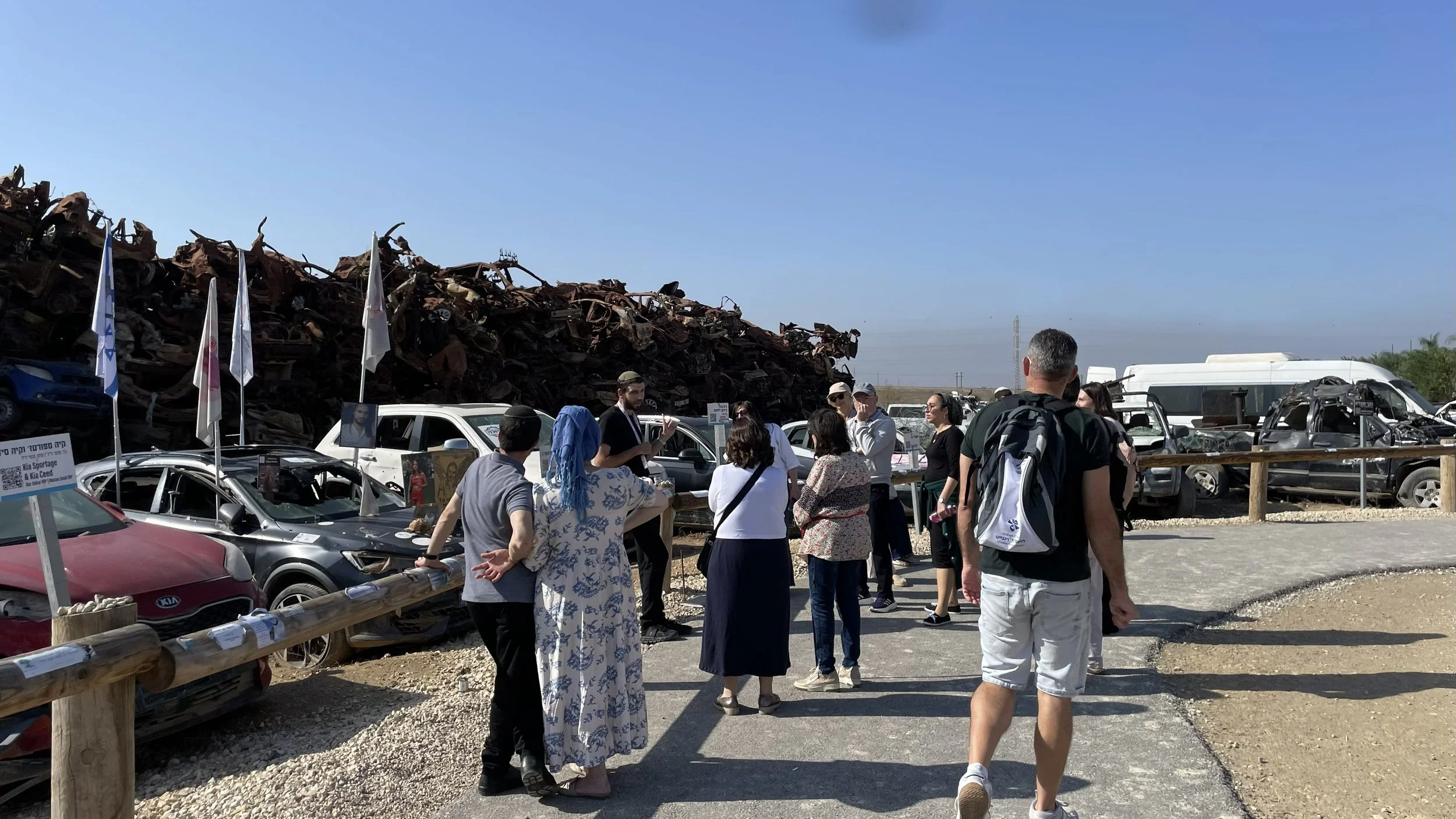
The Western Negev, the region bordering the Gaza Strip, witnessed unspeakable horrors on October 7th, 2023, in a premeditated large scale terrorist attack. Visiting the memorial sites of the Gaza Envelope carries profound emotional weight but offers essential understanding of Israel's current reality. The Nova Music Festival site, located near Kibbutz Re'im about an hour and a half drive from Tel Aviv, has become a memorial where thousands of Israelis have made pilgrimage. Nearby kibbutzim like Kfar Aza, Be'eri, and Nir Oz suffered devastating attacks. These are not easy visits - you'll confront evidence of atrocities, hear testimonies of survival and loss, and witness the physical destruction that news reports could only partially convey. However, many believe that bearing witness represents both moral necessity and support for communities rebuilding their lives.

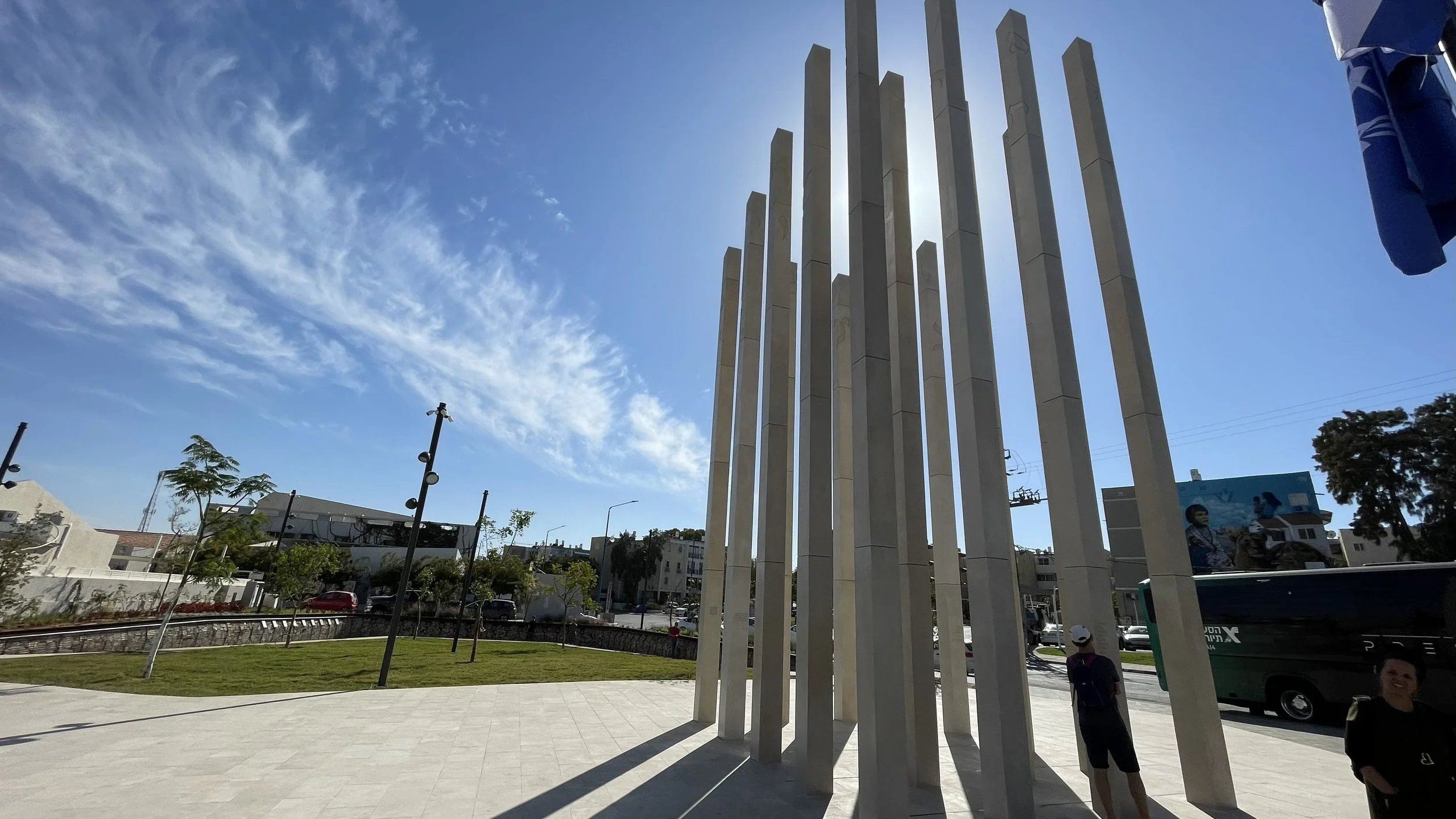
Beersheba (or Be’er Sheva) is the largest city in the Negev. It serves as the gateway to Israel's southern desert. Located about 70 minutes from Tel Aviv, this rapidly growing city combines modern development with ancient roots. Tel Be'er Sheva, the archaeological site just outside the modern city, preserves remains from the biblical period when Abraham dug wells here. The Modern city hosts Ben-Gurion University of the Negev, creating a young, dynamic atmosphere - a kind of college town. The city's museums include the Negev Museum of Art housed in a renovated Ottoman governor's mansion, and the Israeli Air Force Museum displaying dozens of aircraft at the nearby Hatzerim base. Beersheba is also a great stop for fueling up on a roadtrip through the Negev Desert all the way to Israel’s southernmost spot. I’ll elaborate on that in the next episode.
Thanks for listening and you’ll hear from me again when the next episode comes out next week. Until then - I am Tel Aviv tour guide Tomer Chelouche, signing off and hoping to see you soon in Tel Aviv.